Worried About Your Basement Walls?
If you’ve noticed foundation cracks, bowing walls, water intrusion, or other signs of basement wall problems, it’s smart to have the situation checked before it gets worse. Call today to discuss your basement concerns and find out what may be causing the problem.
Call 313-367-0241Your basement walls do more than separate your home from the surrounding soil. They are part of your home’s structural system, helping support the weight above while keeping groundwater and soil pressure outside where they belong.
When basement walls begin to fail, the warning signs are not always dramatic. A small crack, a damp spot, or a wall that looks slightly bowed can be easy to dismiss. But some basement problems become significantly more expensive when they are allowed to progress.
So, how can you tell if your basement walls are failing?
Here are five signs homeowners should never ignore, along with answers to common questions about basement wall problems.
1. Your Basement Walls Have Large or Growing Cracks
One of the most common warning signs is cracking in the basement walls.
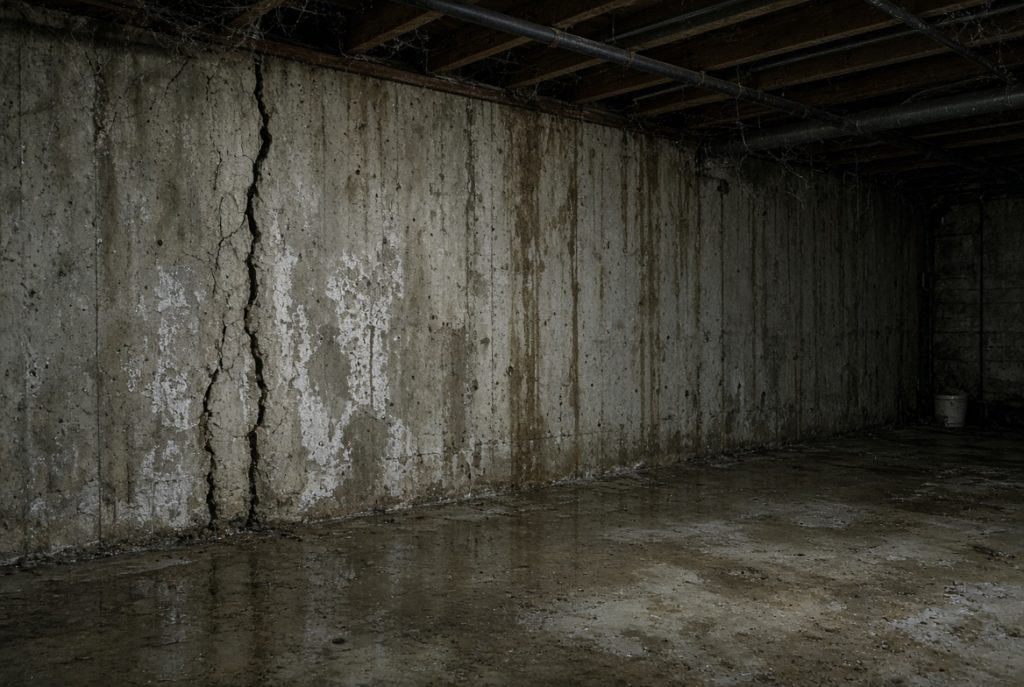
Not every basement crack means your foundation is failing. Concrete naturally shrinks as it cures, and small vertical cracks can sometimes be relatively minor. The concern increases when a crack is large, widening, leaking, or changing over time.
What do serious basement wall cracks look like?
Pay particular attention to:
- Horizontal cracks
- Stair-step cracks in masonry
- Cracks that are getting wider
- Cracks accompanied by water
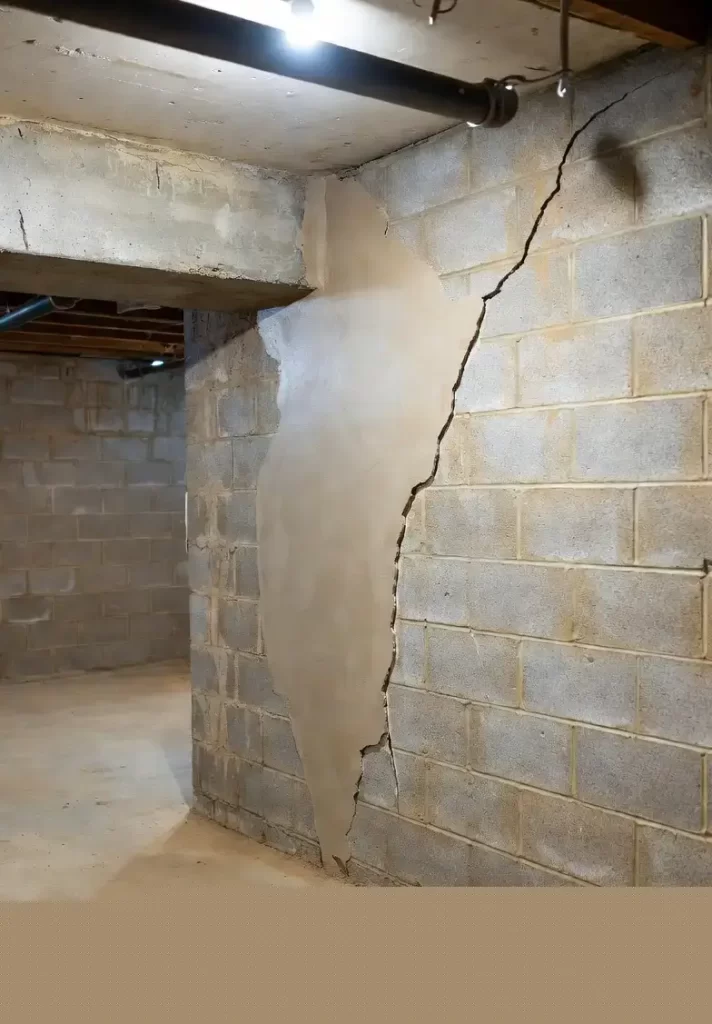
- Cracks that extend through multiple courses of block
- Cracks around windows or doors
- Cracks that appear alongside bowing or leaning walls
A horizontal crack deserves particular attention because it can indicate that outside soil is pushing against the wall.
Basement walls are constantly exposed to pressure from the soil surrounding your home. Hydrostatic pressure from groundwater can add even more stress. If that pressure becomes greater than the wall can safely handle, cracking can develop.
Should I worry about a small basement wall crack?
A small crack isn’t automatically an emergency, but it shouldn’t simply be forgotten.
Take a photograph of the crack and monitor it periodically. You can also mark the ends of the crack and record the date. If it grows, becomes wider, begins leaking, or is accompanied by other structural changes, have the wall evaluated.
The important thing is not just the size of the crack today. Movement over time can tell you much more about what is happening.
2. The Basement Wall Is Bowing or Leaning
A basement wall that is visibly bowing, bulging, or leaning is one of the clearest signs that something is wrong.
Ideally, your basement walls should remain relatively straight and plumb. When a wall begins moving inward, it can indicate that soil pressure outside the foundation is becoming too much for the wall to resist.
This problem is particularly common with poured concrete walls and concrete block foundations, although the symptoms can vary depending on the type of foundation.
Why do basement walls bow inward?
The most common causes include:
- Soil pressure
- Hydrostatic pressure
- Poor drainage
- Expansive or saturated soil
- Foundation movement
- Long-term water problems
A basement wall doesn’t necessarily fail overnight. In many cases, movement happens gradually.
You might first notice that the wall looks slightly curved. Later, cracks may develop. Windows can become difficult to open, and doors may stop operating normally.
Can a bowed basement wall be repaired?
Often, yes—but the appropriate repair depends on the amount and cause of movement.
Some walls can be stabilized using reinforcement systems. Other situations may require more extensive foundation repair or exterior drainage improvements.
The key is getting the problem evaluated before the movement becomes more severe.
3. Water Is Coming Through the Basement Walls
Water stains, damp areas, and actual leaks are another major warning sign.
A basement wall doesn’t have to be visibly collapsing to have a serious moisture problem. Water entering through cracks or joints can indicate that groundwater is finding a path through the foundation.
Why is water coming through my basement walls?
Common causes include:
- Foundation cracks
- Hydrostatic pressure
- Poor grading around the house
- Clogged or damaged gutters
- Downspouts discharging too close to the foundation
- Failed exterior waterproofing
- Poor drainage
- A high water table
Sometimes the solution is as simple as correcting exterior drainage. Other times, the water problem is connected directly to the foundation.
Look for white, chalky deposits called efflorescence on basement walls. Efflorescence occurs when water moves through masonry and leaves mineral deposits behind as it evaporates.
Efflorescence doesn’t necessarily mean the wall is structurally failing, but it does tell you that moisture has been moving through the masonry.
Is a wet basement wall a structural problem?
It can be.
Water itself doesn’t automatically mean your foundation is failing, but persistent moisture can contribute to deterioration and can point to pressure-related problems affecting the foundation.
If water is entering through a crack, especially a crack that is growing or accompanied by wall movement, it’s worth having the situation professionally evaluated.
4. The Concrete or Mortar Is Deteriorating
Basement walls can also show signs of deterioration on their surface.
Look for areas where concrete is:
- Flaking
- Crumbling
- Spalling
- Breaking apart
- Exposing aggregate
- Showing rust-colored staining around reinforcement
For block foundations, inspect the mortar joints as well. Mortar that is deteriorating, cracking, or separating can weaken the overall wall.
Why is my basement wall crumbling?
Moisture is often part of the problem.
Repeated exposure to water can contribute to deterioration, particularly when the foundation remains wet for long periods. In colder climates, freeze-thaw cycles can also cause moisture trapped in masonry to expand and contribute to damage.
This is especially important for Michigan homeowners. Foundations face substantial seasonal changes in temperature and soil moisture, which can place additional stress on basement walls.
Surface deterioration doesn’t always mean the entire foundation needs to be replaced. But widespread deterioration should not be ignored.
5. Your Basement Doors or Windows Suddenly Don’t Work Correctly
This is one of the less obvious signs of foundation movement.
If a basement door that previously opened normally suddenly sticks, or a basement window becomes difficult to open or close, don’t automatically blame the door or window.
Changes in the foundation can alter the shape and alignment of the openings.
Can foundation movement make doors stick?
Yes.
When a basement wall shifts, bows, settles, or moves laterally, the framing around a door or window can become distorted. That can cause:
- Doors to stick
- Windows to bind
- Frames to become uneven
- Gaps to appear around openings
- Floors or walls to become visibly out of level
One isolated sticky door isn’t proof of foundation failure. Homes naturally move over time.
But if a sticking door or window appears at the same time as foundation cracks, water intrusion, or a visibly bowing wall, the combination is much more concerning.
What Causes Basement Walls to Fail?
Basement walls can develop problems for several different reasons, and sometimes more than one factor is involved.
Soil pressure is a major culprit. The soil surrounding your foundation pushes against the walls continuously.
Water pressure can make that problem worse. Saturated soil becomes heavier, and groundwater can create hydrostatic pressure against the foundation.
Drainage problems can contribute as well. Gutters that dump water beside the foundation, poor grading, clogged footing drains, and inadequate waterproofing can all increase the amount of water surrounding your basement.
Age, construction quality, soil conditions, and previous foundation repairs can also play a role.
Can You Fix a Failing Basement Wall?
In many cases, basement wall problems can be repaired or stabilized without replacing the entire foundation.
The right solution depends on what’s actually causing the problem.
A minor crack may require monitoring or sealing. Water intrusion may require drainage improvements or waterproofing. A bowing wall may require structural reinforcement or another stabilization method.
That’s why simply filling a crack isn’t always the right answer.
If the wall is moving, the underlying cause needs to be identified.
When Should You Call a Basement Professional?
Call for an evaluation if you notice horizontal cracks, significant bowing, recurring water intrusion, major deterioration, or several warning signs happening at the same time.
Don’t wait until a basement wall visibly collapses before taking action. Foundation problems are generally easier to address when they are identified early.
Basement Walls Can Tell You The Shape of Your House
A basement wall doesn’t have to be falling apart to tell you there’s a problem.
Growing cracks, bowing, water intrusion, deteriorating concrete or mortar, and suddenly sticking doors or windows can all be warning signs worth investigating.
The good news is that many foundation problems can be addressed before they become major structural emergencies. The first step is figuring out exactly what’s happening and why.